Author
Douglas Mankiewicz
Founder, Dynamic Collectibles Management
Douglas Mankiewicz is the founder of Dynamic Collectibles Management, the company behind DCM Grading, a card grading and collection platform based in Georgia. A lifelong collector of trading cards, sports memorabilia, comic books and pop-culture collectibles, he spent his career in advertising technology before building DCM Grading so that collectors could grade, label, showcase and sell their cards without mailing them away. He writes about card condition, grading standards, collecting with your family, and the practical side of the hobby.
A collector first
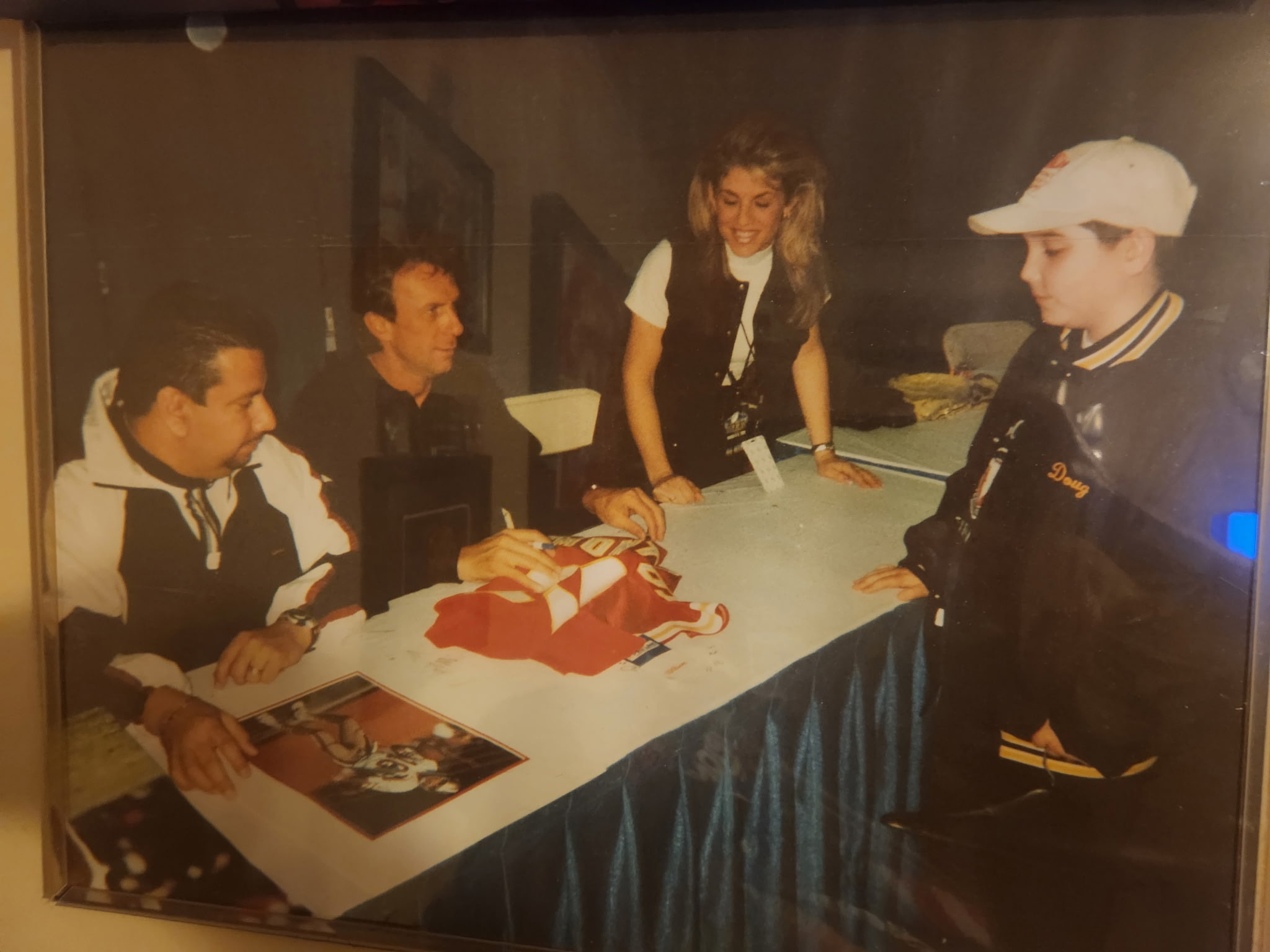
Doug grew up in a house where eBay deliveries were an event. His father would unwrap each package of autographed rookie cards with the same excitement every time, and that excitement was contagious. Weekends meant card shows, meet and greets, and long tables of binders. He met wrestlers, actors and sports icons along the way, and still has the jersey Joe Montana signed for him in person.
That upbringing shaped how he sees the hobby. Cards were never spreadsheets of resale value. They were stories, players, artists and moments, and the fun was in finding them, holding them and sharing them with people who cared about the same things.
When he became a parent, he wanted his own children to feel that. Opening packs together, sorting a stack of pulls, reading comics on the floor, arguing about which card in a box is the best one. DCM Grading started as a way to make that experience easier to keep, protect and pass on.
Why he built DCM Grading
Doug spent his professional career in advertising technology, working across internet infrastructure, web development, AI integration, marketing platforms and creative production. He knew what it took to build software that real people use every day, and he watched the grading industry move in a direction that did not match how most collectors actually think.
Traditional grading had become an investment product. Ship your cards away, wait months, pay per card, and hope the number that comes back justifies the cost. That model serves flippers well. It does not serve the collector who wants to protect a card, show its condition clearly, put a label on it that reflects their own collection, and trade it with friends without a middleman.
DCM Grading is his answer. Photograph a card, get a grade in about a minute with four subgrades and a written reason for every deduction, print a slab label in the style you choose, track what your collection is worth, and list a card on eBay in one step. The card never leaves your hands. The grading engine, DCM Optic, applies the same published rubric to every card, every time.
What he writes about
- How card condition is actually assessed: centering, corners, edges and surface, and what separates a 9 from a 10
- Which cards are worth grading and which are better left raw
- Collecting with kids and keeping the hobby fun
- Sports cards, Pokémon, Magic, Lorcana, One Piece and the sets he is chasing
- Slab labels, display and organizing a collection you actually look at
Quick facts
- Founder, Dynamic Collectibles Management, the company behind DCM Grading, Georgia, USA
- Collector of trading cards, sports memorabilia, comics and pop-culture collectibles since childhood
- Background: advertising technology, web development, AI integration and marketing platforms
- Favorite piece: a Joe Montana jersey, signed in person at a card show
- Grades cards with DCM Optic, the same engine every DCM member uses
Articles by Douglas Mankiewicz

DCM Sold Report, September 2026: What DCM Graded Cards Sold For on eBay
4 of 6 DCM graded cards that sold on eBay in September 2026 beat the average raw sale for the same card. Here is every comparable sale, with raw and PSA prices side by side.

How Consistent Is DCM Optic? Our Repeatability Data, Method and Limits
DCM Optic grades every card three times and takes the median. On a 600-card sample from September and October 2026, all three passes landed on the same grade 68.5% of the time and within one grade 89.3% of the time. Here is the method, the results and the limits.

How DCM Optic Produces a Grade: From Three Passes to the Final Result
A DCM grade is built in a fixed order: an image check, three independent evaluations, the median of those evaluations, a magnified inspection, the lower of front and back for each category, and finally the lowest of the four categories. Here is each step, with a real card worked through.

How to Evaluate an AI Card Grade: Consistency, Confidence and Limits
Before you rely on an AI card grade, check four things: whether the service publishes its rules, how it handles disagreement between evaluations, what its confidence rating actually measures, and what it admits a photo cannot show. Here is how to read each one on a DCM report.

Which DCM Plan Fits Your Collection? Packs, Membership and Enterprise Compared
DCM grading costs $2.99 for one card, $0.66 a card with the 150-credit VIP pack, and $0.50 a card with Card Lovers Annual. Consumer credits never expire; Enterprise monthly allowances reset. Here is how to pick the right option for the size of your collection.
What DCM Provides and What You Supply Yourself
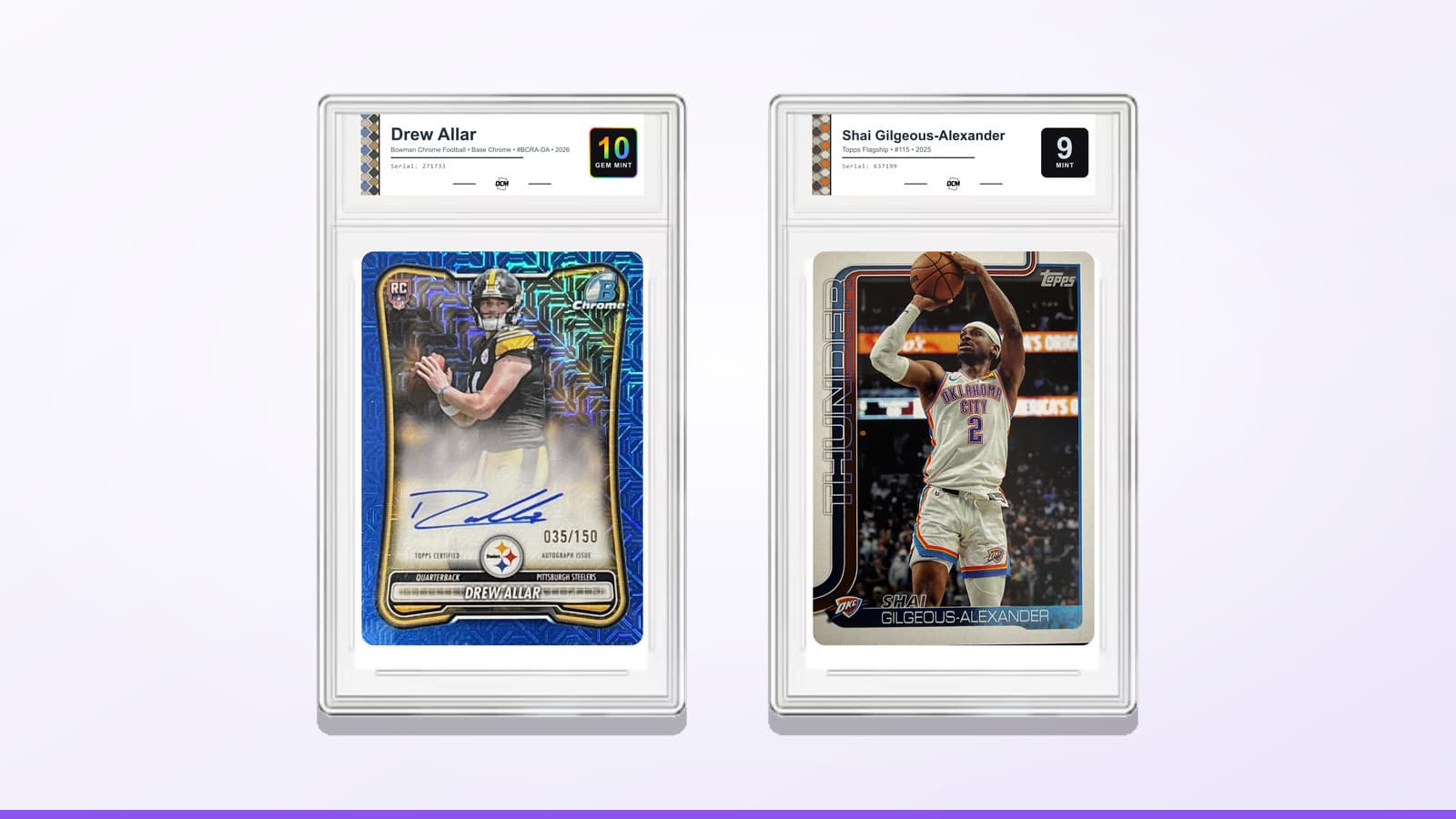
DCM is a digital grading service. Every grade comes with four subgrades, a written condition report, printable label files and a public verification page. You supply the card, the photos, the holder and the printing. DCM does not authenticate cards or encapsulate them for you.

Where to Check DCM's Work: Population Data, Grade Reports and Labels
DCM publishes a live population report covering 41,432 graded cards, a public report for every grade, a versioned grading standard and repeatability data. Here is what each source answers, how to use it, and the limits of each.

Card Grading Options in 2026: Compare the Outcome, Cost and Wait
The right grading service depends on the outcome you need. For a sealed, registry-eligible slab, the mail-in graders are the only option, from $20 to about $80 a card at the cheapest open tiers with waits of weeks to months. For a documented grade today on a card that never leaves your hands, DCM grades from photos in about a minute for $0.50 to $2.99.

How to Slab Your Own Cards: Labels, Holders, and a Scannable Grade Report
You can slab your own cards. Grade the card, preview it in a slab, top loader and One-Touch on the card page, design a label in the card's own colours, and print it true size. The QR on the back opens the full grade report.
Pop Report Deep Dive: What Actually Grades a 10 (Real Numbers from 30,490 Cards)
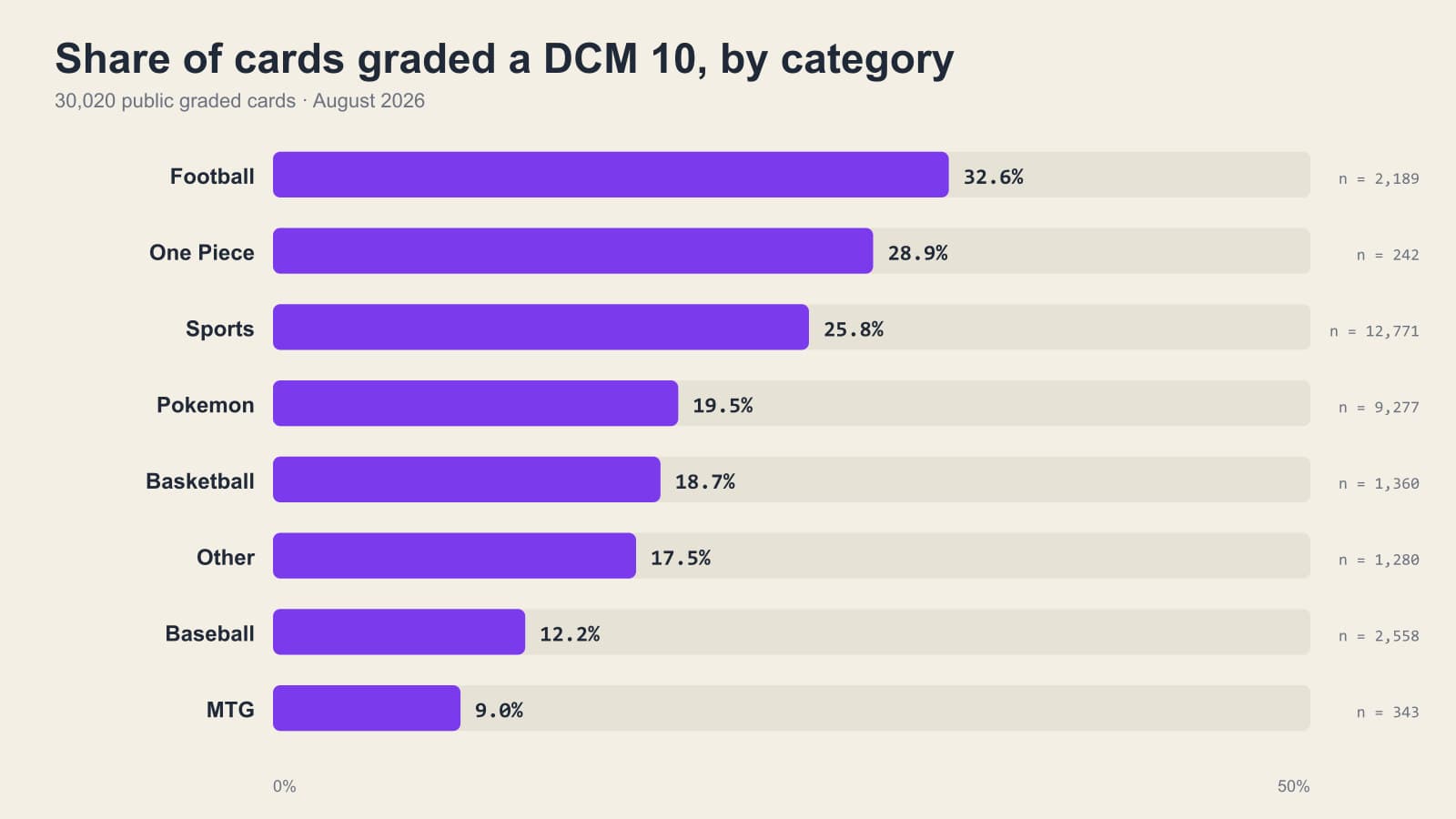
22.3% of the 30,490 public cards graded on DCM are a 10, and 44.6% are a 9. The rate varies a lot by category, from 32.6% for football to 9.0% for Magic. Here is the full breakdown and what drives it.
What Is Weakest-Link Grading? Why One Subgrade Decides Everything
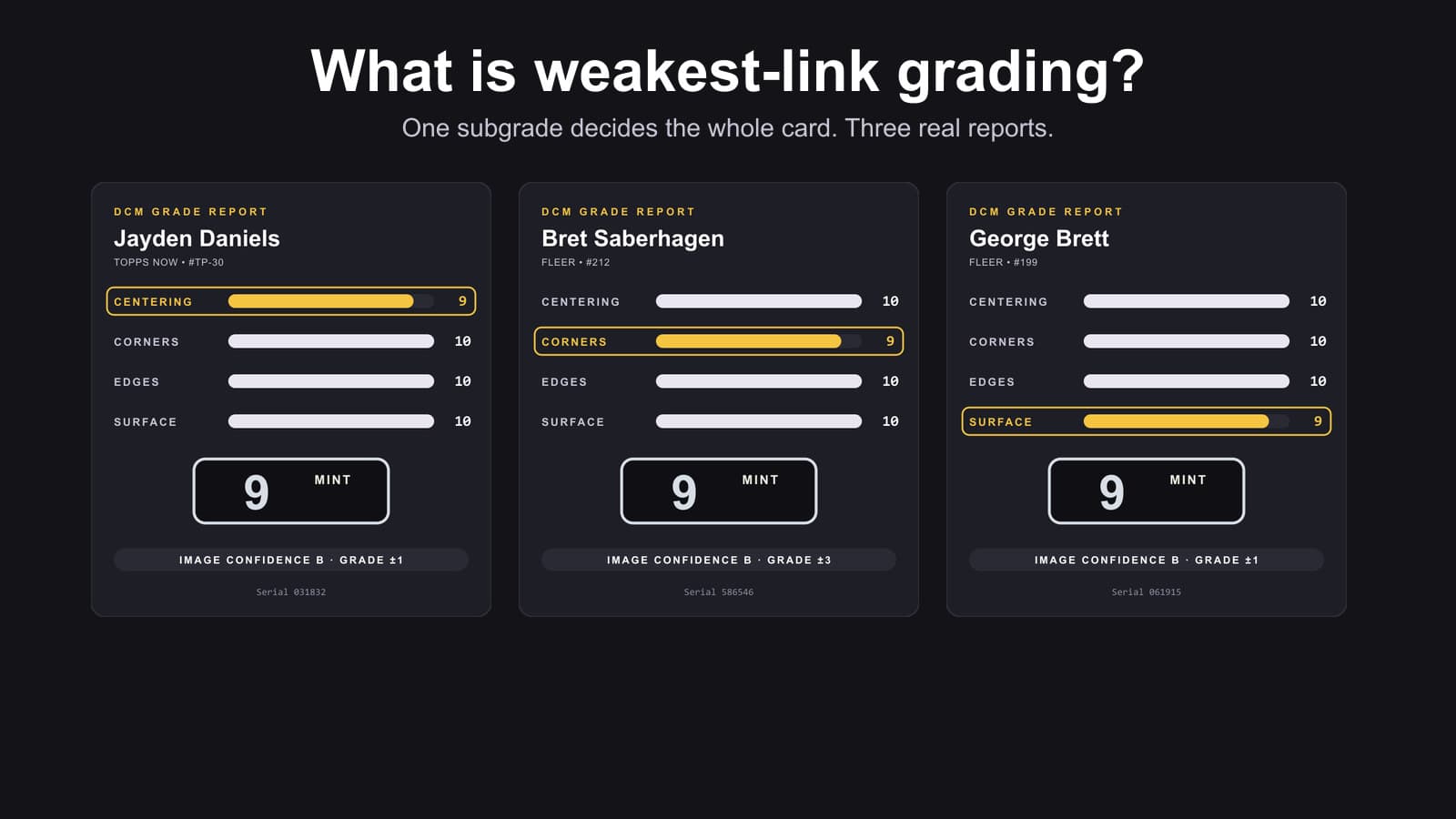
Weakest-link grading means the final grade equals the lowest of the four subgrades. Three real DCM reports show it in action: centering, corners and surface each capping an otherwise perfect card at 9, and why that is the fair way to grade.

30th Celebration Review: 10 Cards Worth Chasing in Pokémon's Anniversary Set
Pokémon TCG: 30th Celebration launched worldwide on September 16,2026 with a new Futuristic Rare tier, ten Special Illustration Rares, 30 Pikachu cards and a 30-card Classic Collection. We sorted the full checklist and picked the cards worth chasing.

Why Your Mint Card Came Back a 9: Four Things You Cannot See at Arm's Length
Most cards that come back a 9 look flawless to the person who submitted them. Four specific defects are almost invisible at normal viewing distance and obvious under magnification. Here is each one on a real graded card, and how to check before you pay a fee.
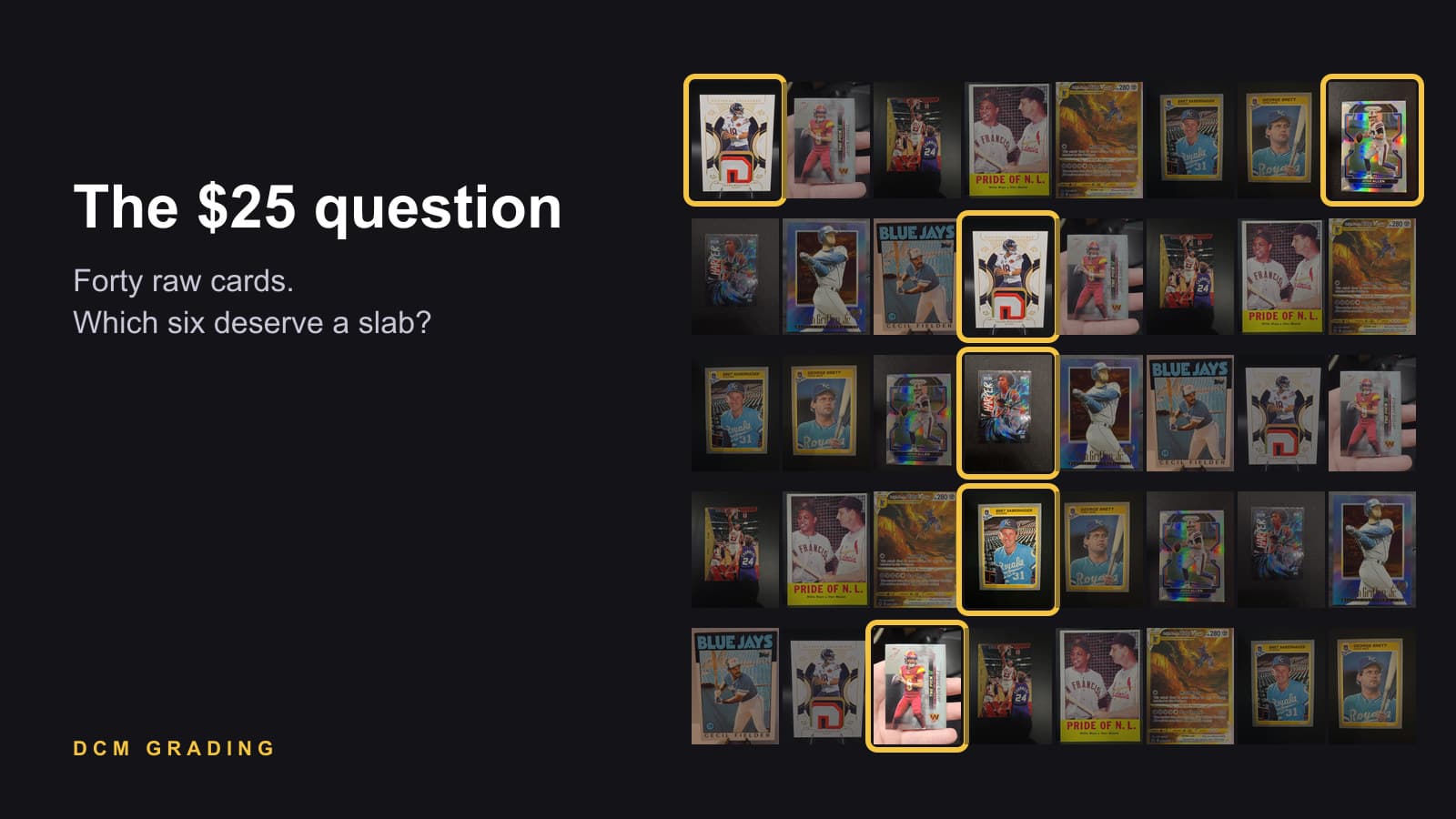
The $25 Question: Which of These 40 Cards Deserve a Slab?
Submitting forty cards to a mail-away grader costs about $1,000 and a couple of months. Grading all forty at home first took under an hour and found six that clear the bar. Here is the sort, the math, and the rule for deciding what deserves a slab.
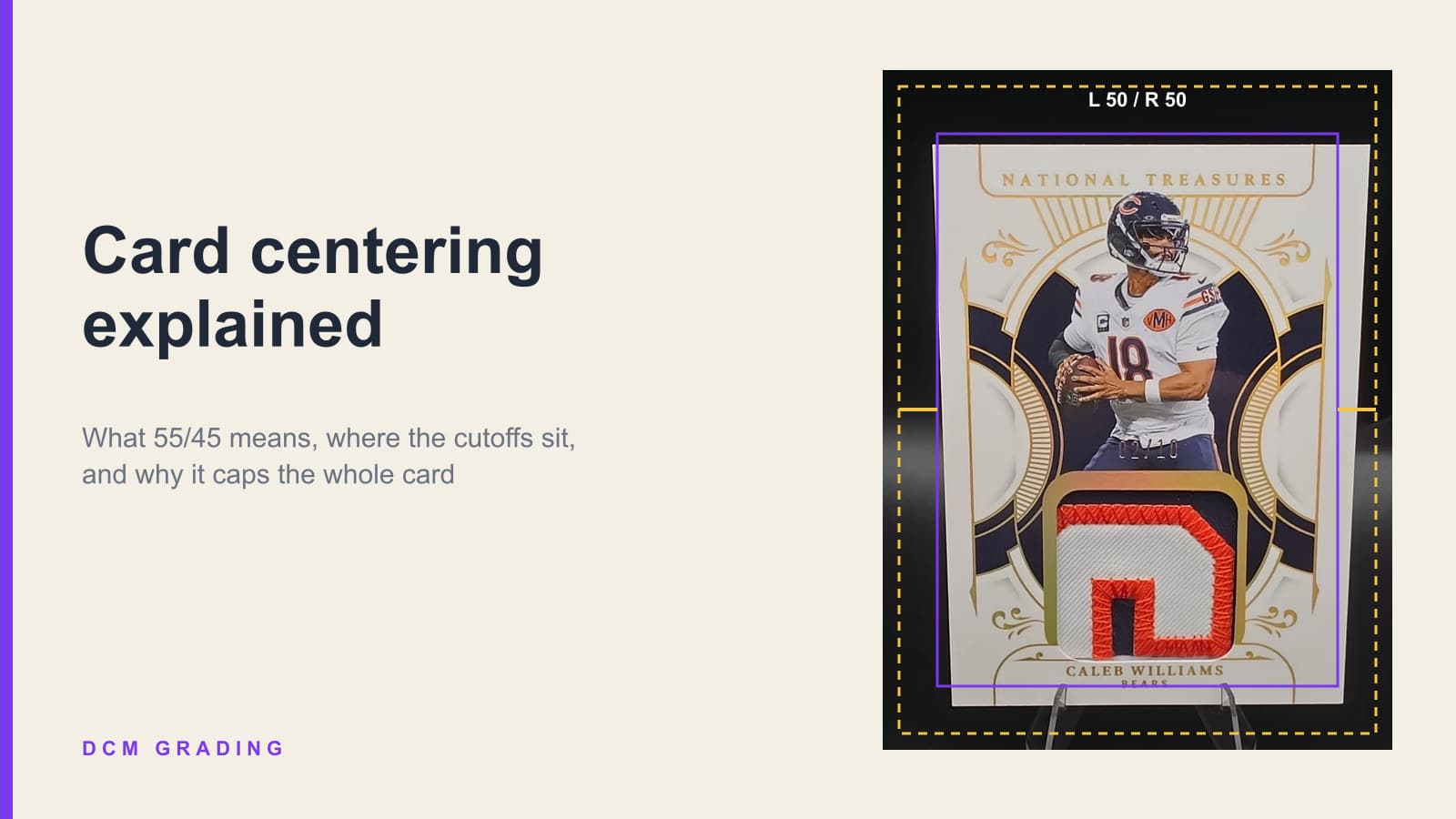
Card Centering Explained: What 55/45 Means, Where the Cutoffs Sit, and Why It Caps the Whole Card
Centering is measured as a left/right and top/bottom ratio of the borders. A 55/45 card looks centered at arm's length and still misses a Gem Mint cutoff at some graders. Here is how to read the ratio, where the common cutoffs sit, and why one centering measurement can cap an otherwise perfect card.
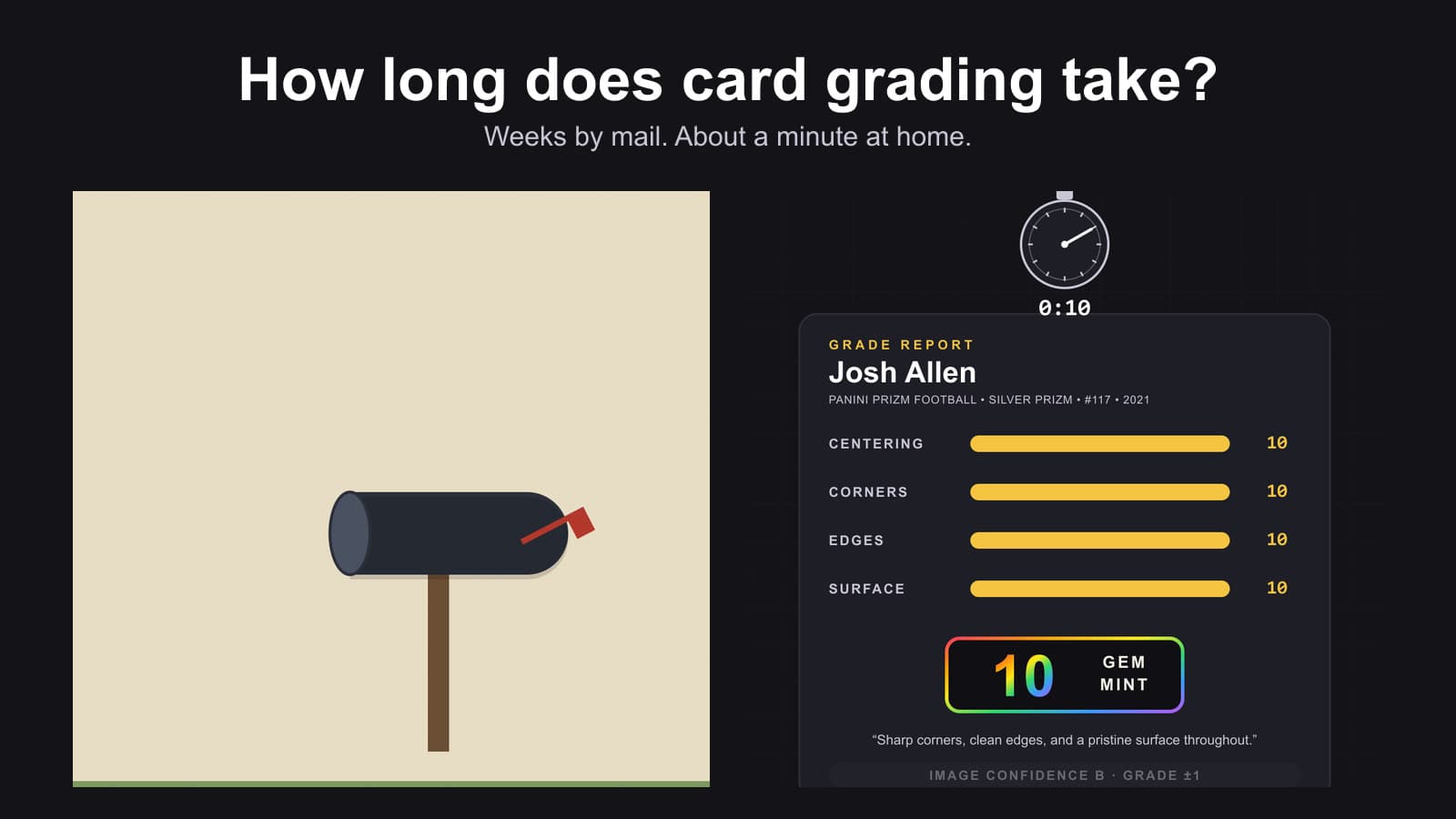
How Long Does Card Grading Take? Turnaround Times in 2026, and the One-Minute Alternative
Mail-away card grading takes anywhere from 15 business days to more than 100 depending on the tier, plus shipping both ways. Here are the published numbers as of October 2026, where the time goes, and the at-home alternative that takes about a minute.
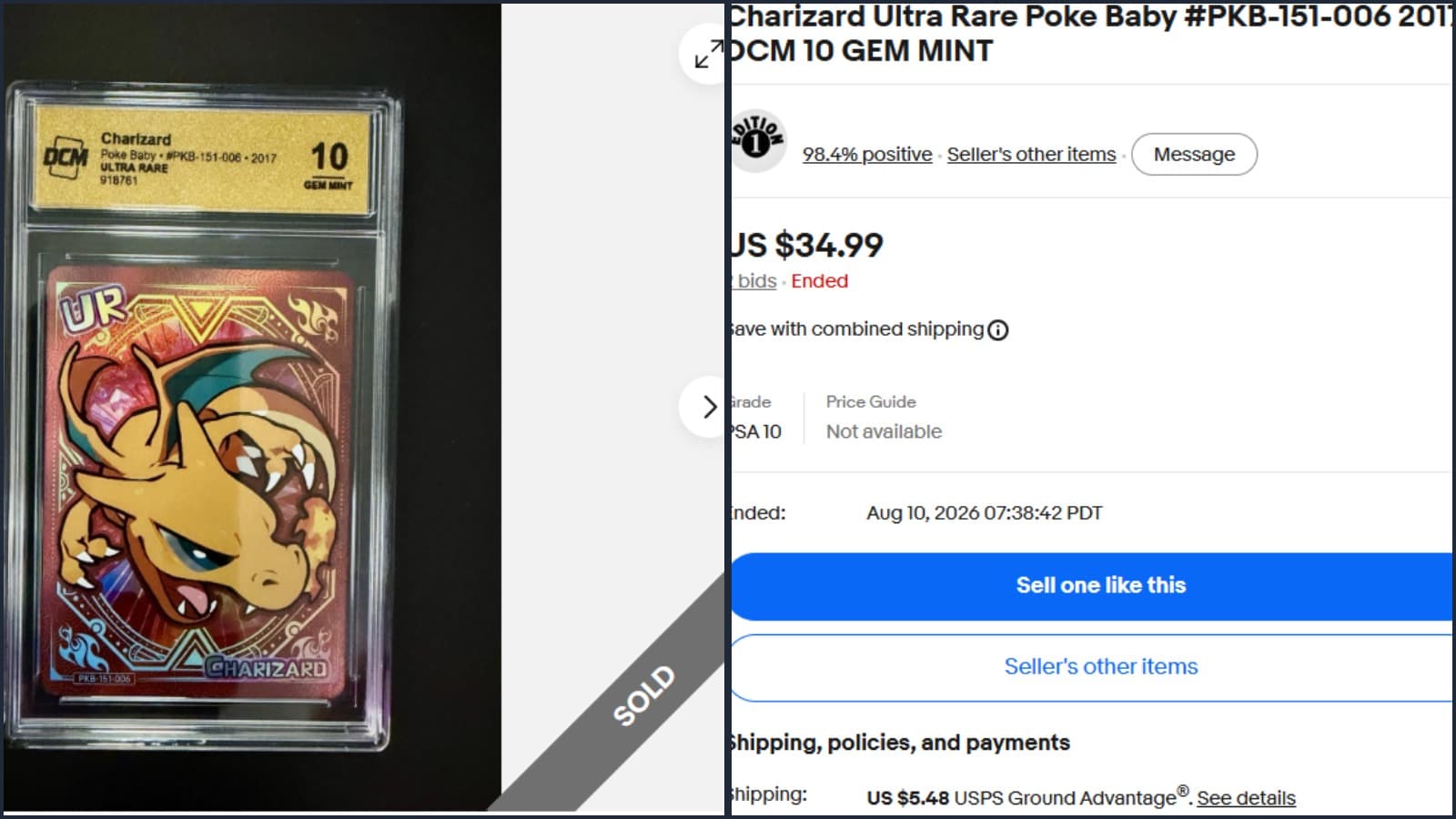
Card Spotlight: The $5 Charizard That Sold for $34.99 in a Custom Gold Slab
A PokeBaby Charizard UR graded DCM 10 Gem Mint with perfect 10s in all four sub-grades just sold on eBay for $34.99, roughly 600% over raw price. Here is how a custom gold slab and a scannable grading report turned a five dollar novelty card into a standout sale.
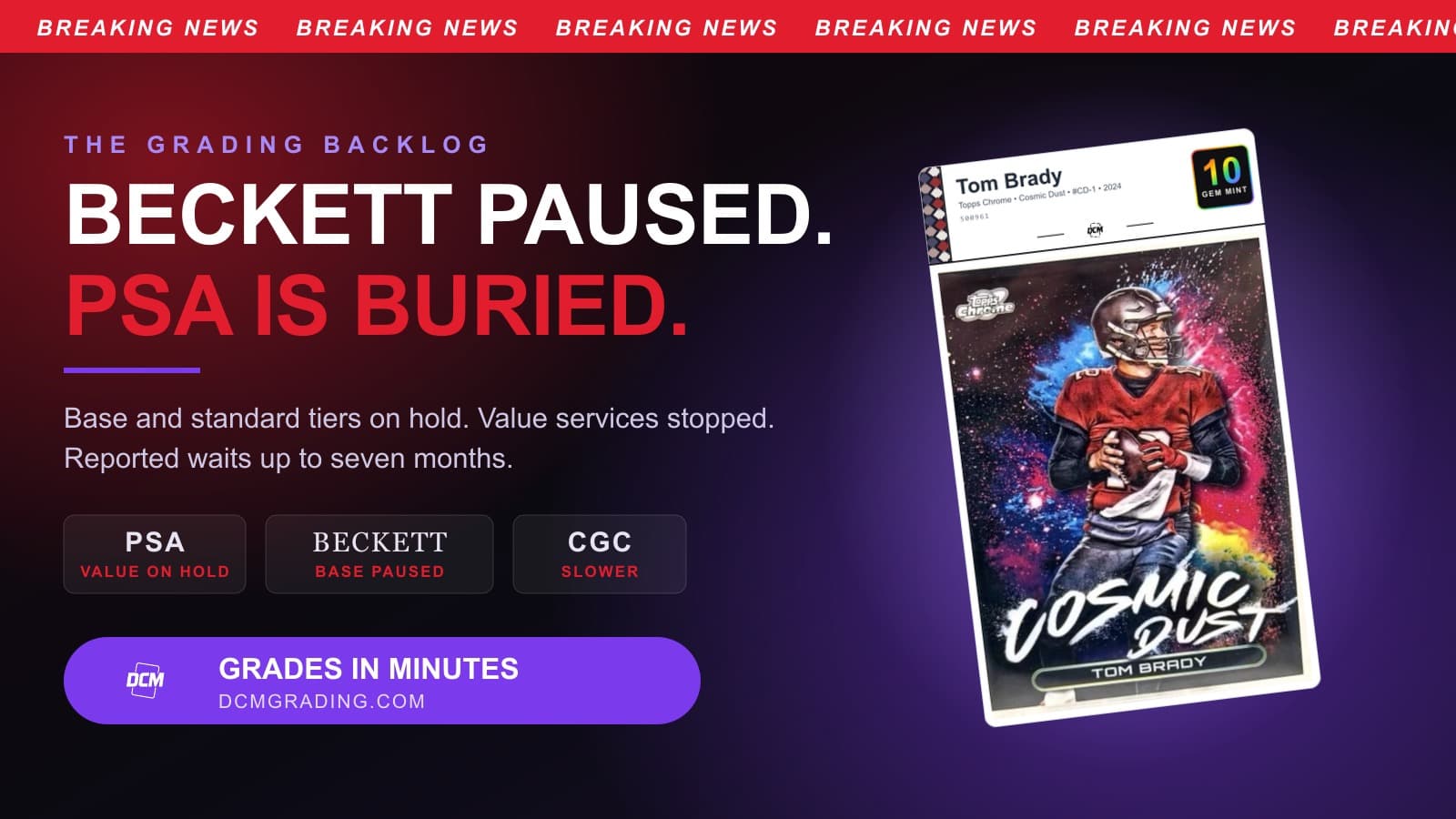
Beckett Paused. PSA Is Buried. What Now for Your Everyday Cards?
Beckett paused base and standard grading. PSA value services are on hold behind a reported 10 million card backlog. Here is what collectors are saying, what the wait actually costs on a $40 card, and how to keep grading without the mailer.

Is Grading Cards Worth It?
Grading is worth it for some cards and some collectors, and not for others. Five honest reasons to grade, one honest reason to skip it, and how to tell the difference.

Pitch Black Review: 8 Cards Worth Chasing in Pokemon's Darkest New Set
Pitch Black just landed with six Mega Evolutions, a moody dark theme, and one Mega Darkrai ex sitting above everything. We ranked the full 120-card set and picked the cards worth chasing, with a close look at the six Special Illustration Rares.

Featured DCM Sold Card: A Mint 9 Kobe Bryant SLAM
Our latest Featured Sold Card is a 2000 Upper Deck SLAM Kobe Bryant that graded a strong DCM 9 Mint and sold on eBay for $55. Here's the full breakdown.
DCM Optic v9.0: three evaluations, a magnified inspection, and grades that explain themselves
DCM Optic v9.0 grades every card with three independent evaluations plus a 24-region magnified inspection, writes reports that always match the numbers, and holds Gem Mint to a stricter standard. Camera and upload improvements catch photo problems before you spend a credit.

Featured DCM Sold Card: A Gem Mint 10 Seismitoad
Our latest Featured Sold Card is a 2025 Black Bolt Seismitoad that graded a perfect DCM 10, got a custom owner-designed slab, and sold on eBay for $276. Here's the full breakdown.
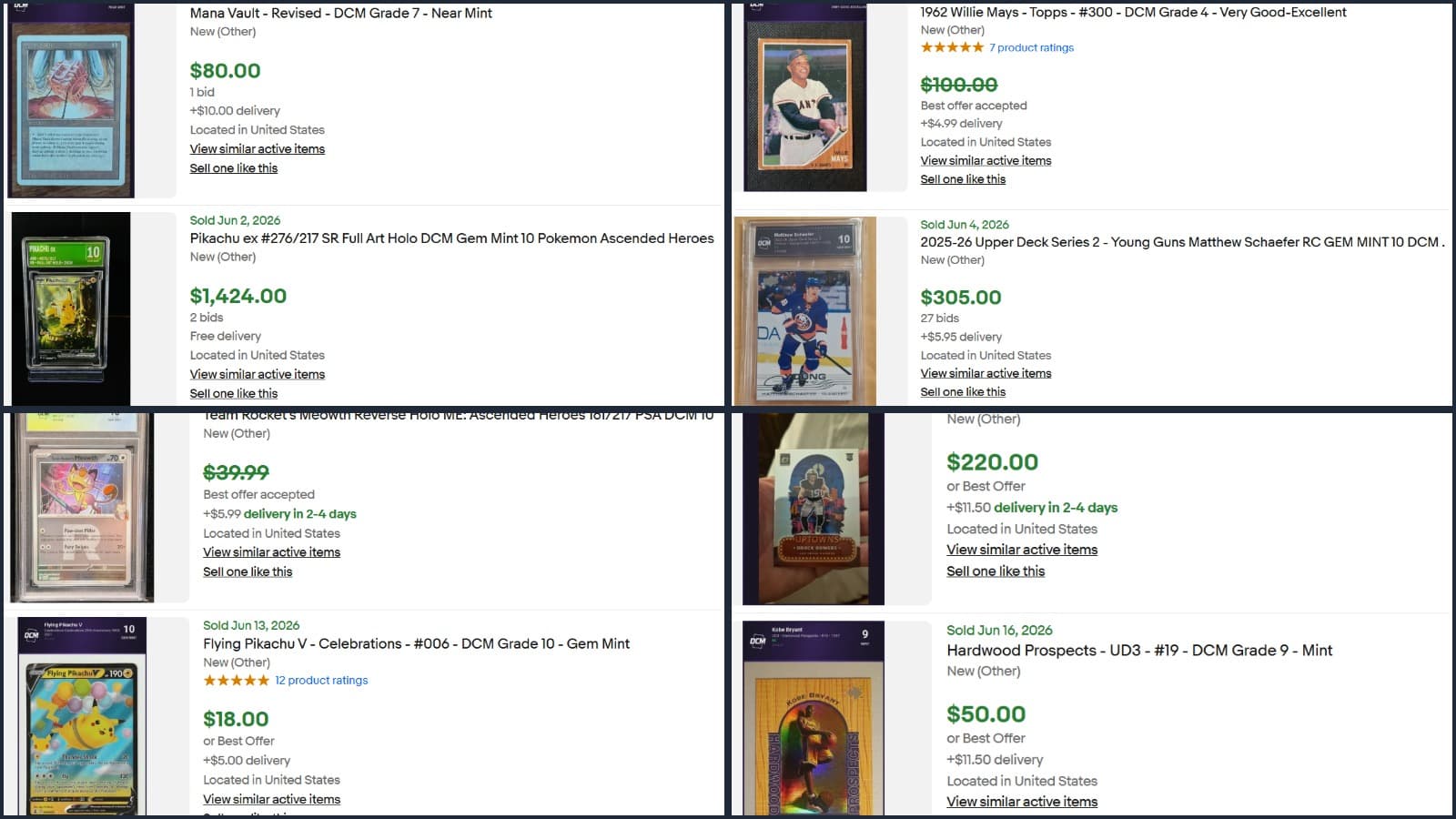
List a graded card on eBay in about a minute
The InstaList Marketplace is a dedicated page on DCM Grading that pre-fills your eBay listing with auto-generated images, your sub-grade breakdown, and a written condition summary. Pick a graded card, review the form, hit publish.
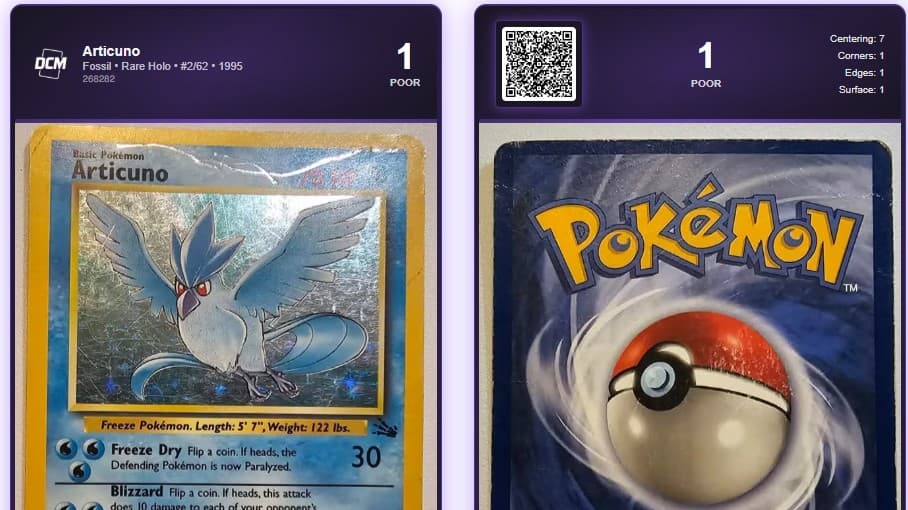
Card Spotlight: A 1999 Fossil Articuno at DCM Grade 1, and Why Low Grades Are Rarer Than You Think
We graded a worn 1999 Fossil Holo Articuno through DCM Optic. Final grade was a 1. Here's the sub-score breakdown, what the AI actually saw, and why slabbed low-grade copies of vintage cards can be rarer than the pristine ones.

Chaos Rising Review: 8 Cards Worth Chasing in the New Pokemon Set
We pulled the full Chaos Rising card list, ranked it by rarity, and picked the 8 cards that actually stand out from the 122-card lineup. Mega Greninja takes center stage, but a few sleeper hits are worth your attention too.

DCM Grading is now on iPhone and Android
DCM Grading is now available as native apps on the Apple App Store and Google Play. Your account, credits, and collection work across iPhone, Android, and the web with no setup required.
DCM Optic v8.6: Data-Driven Grading Improvements from 8,000+ Card Analysis
v8.6 introduces image confidence bias elimination and centering measurement tolerance improvements, backed by a statistical analysis of over 8,000 graded cards across all categories.
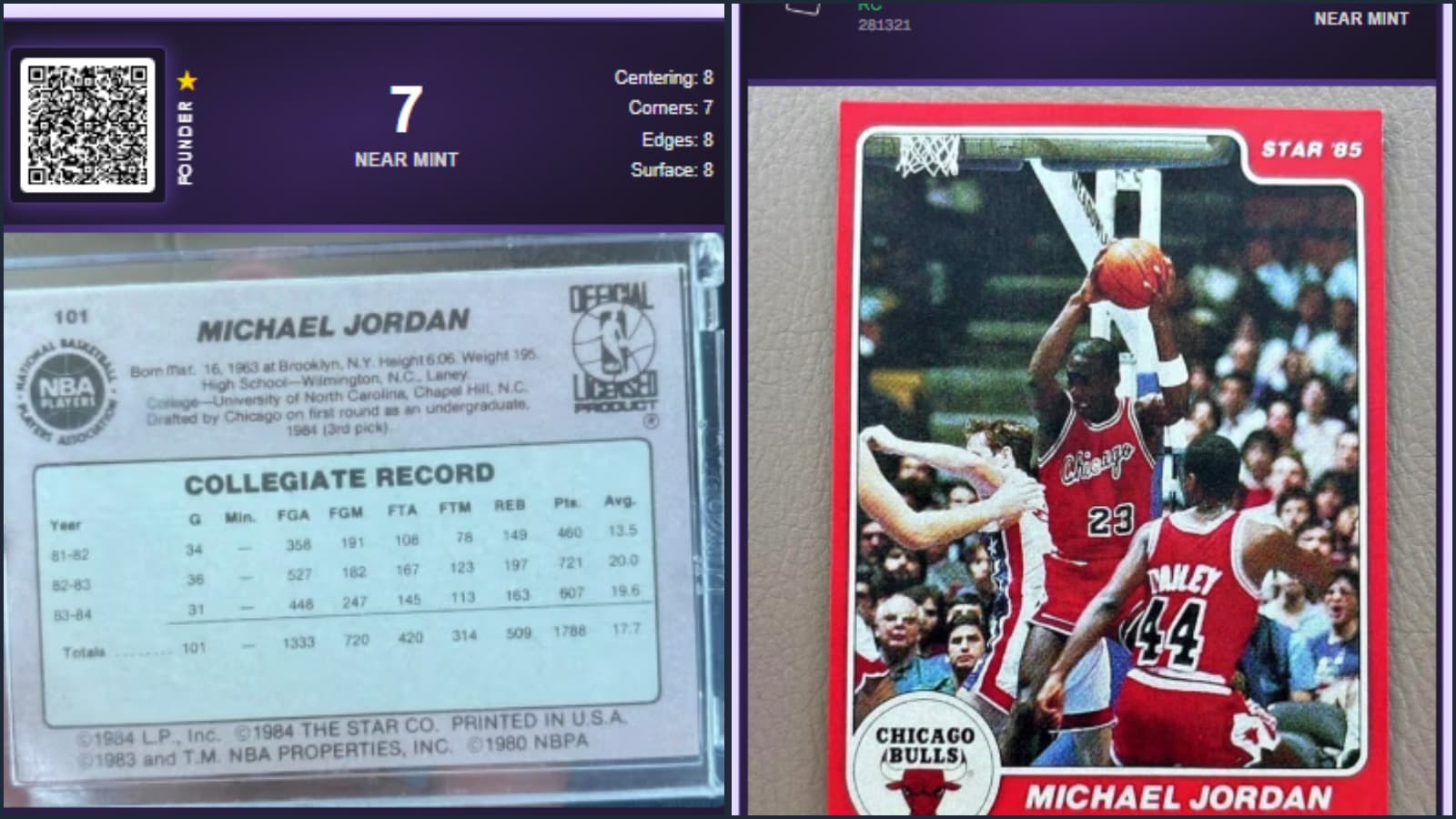
Card Spotlight: The 1984 Star #101 Michael Jordan, a $30K Rookie That's Still Climbing
We graded a 1984 Star #101 Michael Jordan through DCM Optic. Here's what a DCM 7 copy is worth, how prices scale across PSA, BGS, and SGC, and why this pre-Fleer rookie remains one of the most important cards in the hobby.

2025 Topps Disneyland 70th Anniversary Cards
The 2025 Topps Disneyland 70th Anniversary card set blends nostalgia, park history, and premium chase elements into one of the most collectible Disney releases to date. With a 150-card base set, multiple parallels, autographs, relics, and one-of-one sketch cards, the product offers strong appeal across casual fans and serious collectors. This guide breaks down estimated odds, the rarest cards in the set, and the top chase cards driving demand and long-term value.