AI Card Grading. Professional Grades in Under 60 Seconds
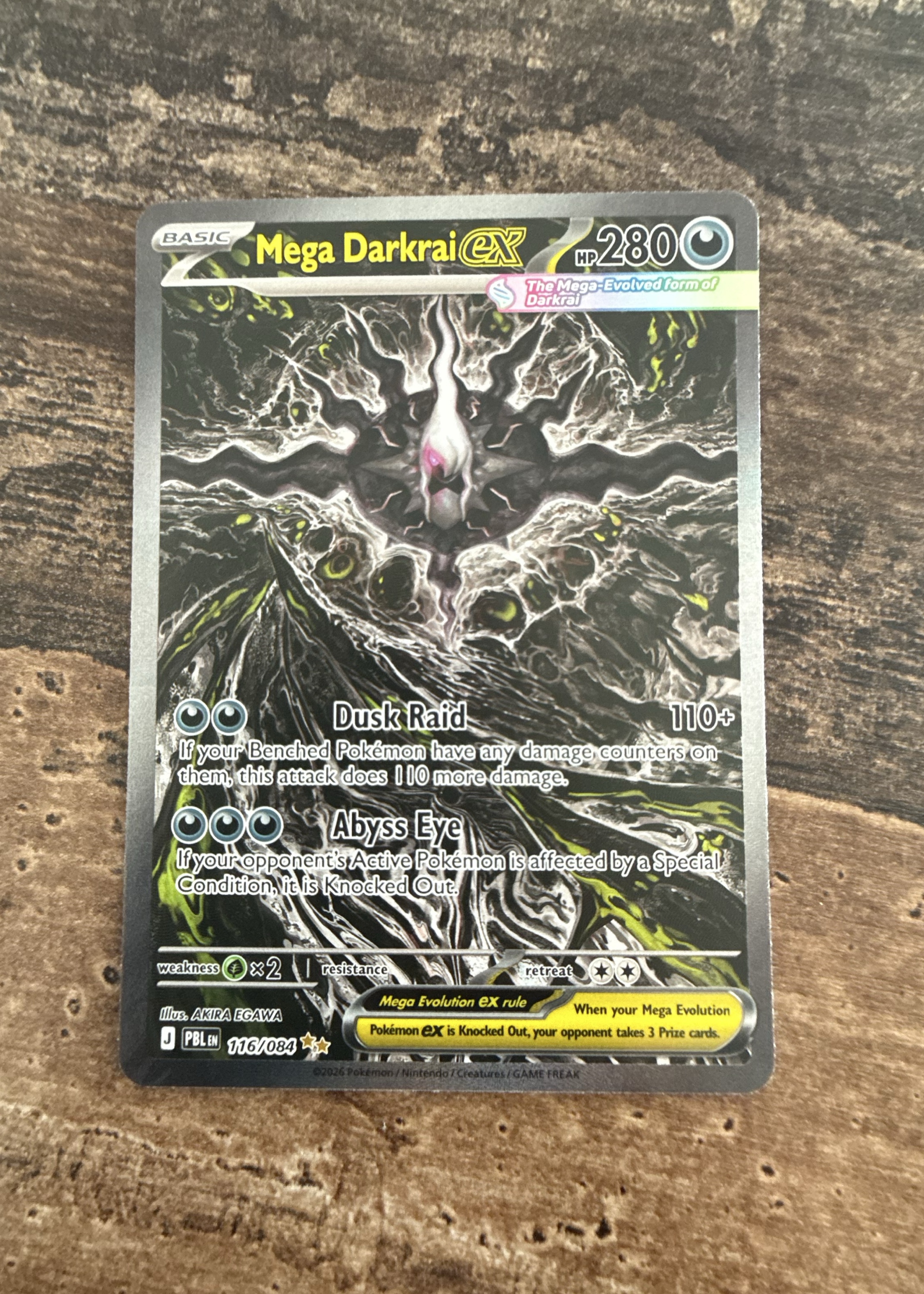
Upload two photos. Get a full DCM grade with subgrades, defect notes, and market pricing in less than a minute. No mailing, no waiting weeks, no card-value minimums.
What is AI Card Grading?
AI card grading, sometimes called robograding or automated card grading, uses computer vision to evaluate a trading card the way a human grader would. It looks at centering, corners, edges, and surface for damage and printing defects, then assigns a standardized grade on a 1 to 10 scale, plus subgrades and a written explanation.
DCM Optic is our AI grading engine. We built it specifically for trading cards, trained it on the same criteria PSA, BGS, and SGC use, and we run every card through three independent evaluations before producing a final grade. That means the grade you see is a consensus, not a single opinion.
The whole process happens from your phone or browser. No shipping, no waiting weeks for a slab to come back, no minimum card value.
Three-Pass Consensus Grading
Single-pass AI grading systems give you one opinion. DCM runs three complete, independent evaluations of every card and takes the median of the three, so one outlier pass can't drag the grade. It is the same technique top grading houses use when they put multiple human graders on a single submission, just automated.
First Pass
A full evaluation of centering, corners, edges, and surface with the complete defect log.
Second Pass
A fully independent re-examination that catches anything the first pass missed.
Third Pass
Final independent verification, followed by the consensus calculation across all three passes.
Why three passes beats one
- • Reduces variance. Taking the median of three evaluations produces more consistent grades than any single pass can.
- • Corroborated findings. Structural damage, and magnified findings that would pull a category well below the main result, have to be corroborated before they count.
- • Consistency score. When all three passes agree, your grade comes with a high-confidence flag.
- • Mirrors how PSA, BGS, and SGC grade. Multiple-grader consensus, automated, and free of the day-to-day inconsistency that comes with rotating human graders.
What the AI Actually Looks At
Every grade is broken down into four subgrades plus a defect log. No black-box scoring. Every deduction is tied to something visible in your photos.
Centering
Independent left/right and top/bottom border ratios on both the front and back of the card. PSA-aligned, with 55/45 or better required for a 10.
Corners
All eight corners (four front, four back) examined for fiber exposure, rounding, impact damage, and structural lift.
Edges
Full edge-length scan for whitening, chipping, nicks, factory cut quality, and dent damage.
Surface
A 9-zone grid scan on both surfaces (18 zones total) for scratches, print defects, white dots, and creases. Finish-aware, so chrome, refractor, and holographic cards get specialized examination.
Intake checks run first. Before DCM Optic scores condition, it confirms both photos are usable, identifies the finish type (refractor, chrome, holographic, matte), detects whether the card is already in a slab or holder, and looks for visible signs of alteration such as markings or uneven borders. These are visual checks, not authentication: a photo cannot prove a card or signature is genuine. Read the full grading rubric.
Every Card Type, No Restrictions
DCM grades any trading card. Common, rare, valuable, or sentimental. No card-value floors, no parallel restrictions, no rarity-tier minimums.
Sports
Baseball, Basketball, Football, Hockey, Soccer, Wrestling
Pokémon
English, Japanese, Promos, Full Art, Vintage
Magic: The Gathering
Foils, Borderless, Old-Border, Modern
Disney Lorcana
All Sets, Enchanted, Special Foils
One Piece TCG
Leader, Character, Manga Art, Parallel
Yu-Gi-Oh!
Vintage and Modern, all rarities
Star Wars Unlimited
All factions, Hyperspace, Showcase
Other
Garbage Pail Kids, non-sports, custom
From Photo to Grade in Under 60 Seconds
Snap two photos
Front and back of the card. Your phone camera is plenty.
Upload
Mobile app or browser. Auto-cropped and quality-scored.
Three passes
DCM Optic runs three independent evaluations.
Get your grade
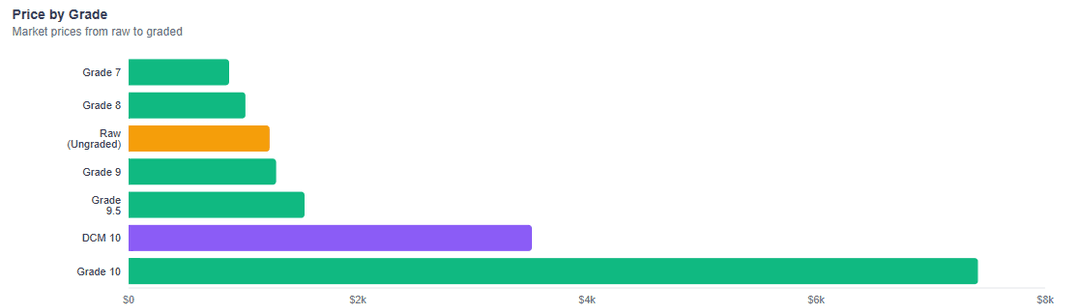
Whole-number 1 to 10 grade, subgrades, defect log, market price.
Reports and Slab Labels Included
Every graded card comes with a printable mini-report that fits a top loader, plus a full report with the complete defect breakdown. Use Label Studio to design your own slab label, then print it on a 2.5×3.5 foldable card and slide it into a One Touch or Magnetic holder.
- • Mini-report for top-loader display
- • Full report with three-pass breakdown and market price
- • Custom slab labels via Label Studio
- • Card Lover and VIP emblems for members
Pricing. As Low as $0.50 a Card with Card Lovers Annual
$0.50
Per card with Card Lovers Annual
$0.66
Per card on the 150-credit VIP pack
$2.99
A single card, no pack needed
Compare that to mail-in grading: in August 2026 the cheapest tiers open at the major services ran from $15 to about $80 per card before shipping and insurance, with published turnarounds from 15 to 100-plus business days. The sourced table is on the grading companies comparison, and what a PSA alternative actually replaces is set out separately.
See all pricingIs AI card grading accurate?
An AI grade is only as good as its method and the photographs behind it, so DCM publishes both. Three independent passes with a median consensus, a rubric published at /grading-standard, limitations published at /grading-limitations, an image confidence letter from A to D with an uncertainty range, and a public verification page for every grade.
Frequently Asked Questions
How does AI card grading work?▾
You upload clear photos of the front and back of your card. DCM Optic runs three independent computer-vision passes over the images, measuring centering, examining all four corners and all four edges, and scanning the full surface in a 9-zone grid. It takes the median of those three passes rather than the average, so a single outlier pass cannot drag the grade. A separate magnified pass then re-examines each corner, edge and surface region on its own crop, and those findings can lower a face. Each category scores as the lower of its two faces, and the final whole-number grade from 1 to 10 is the lowest of the four categories. The whole evaluation takes about a minute.
Is AI card grading accurate compared to PSA, BGS, or SGC?▾
DCM applies the same industry-standard criteria the major grading houses use. 55/45 centering minimums for a perfect grade, structural-damage caps for creases or corner lift, and per-category specialization for foil and chrome surfaces. The three-pass consensus model mirrors how top grading companies put multiple human graders on the same card before assigning a final grade.
What card types can DCM grade?▾
Every major trading card category. Sports cards (baseball, basketball, football, hockey, soccer, wrestling), Pokémon (English and Japanese), Magic: The Gathering, Disney Lorcana, One Piece TCG, Yu-Gi-Oh!, Star Wars Unlimited, Garbage Pail Kids, and other non-sports cards. No card-value floor, no parallel or rarity restrictions.
How much does AI card grading cost?▾
It is $2.99 for a single card, $0.66 a card with the 150-credit VIP pack, and as low as $0.50 a card with Card Lovers Annual ($449 for 900 grades). The packs in between are $2.00 a card (5 for $9.99) and $1.00 a card (20 for $19.99). Compare that to traditional mail-in grading where the cheapest tiers are typically $20 or more per card before shipping.
Do I need to mail my cards in?▾
No. AI card grading is photo-based. Your cards never leave your hands. There is no shipping risk, no insurance to buy, and no months-long wait for return shipping.
What information do I get with each grade?▾
Every grade comes with subgrades for centering, corners, edges, and surface, a defect log explaining each deduction, an image confidence rating from A to D based on photo quality, a three-pass consistency score showing how closely the three evaluations agreed, and a printable mini-report and full report. Card Lovers also get current market pricing tied to the grade.
Ready to grade your first card?
Sign up free and grade your first card on us. No shipping, no waiting, no minimums.
Grade Your First Card Free